I have been reading the work of the late Frankfurt Schule philosopher, Theodor Adorno, this week.
In his book 'Dialectic of Enlightenment' (written with Max Horkheimer) he makes an interesting point about how quickly, in 'modern' societies, rational progress can become irrational regress.
We fall into the trap of blind domination (domination of nature by human beings, domination of nature within human beings, the domination of human beings by other human beings). In a society where progress is held as the highest value, no matter what the cost, human beings, nature, and even the human self, are sacrificed.
Somehow, in our pursuit of enlightenment we become less and less enlightened and more and more totalitarian.
While Adorno would have appealed to the aesthetic (culture, the arts, philosophy), I would also appeal to the mystical and the spiritual. From Descartes, through Francis Bacon, to Isaac Newton, we seem to have lost touch with the sense of the sacred in creation (which includes both human and non-human creation).
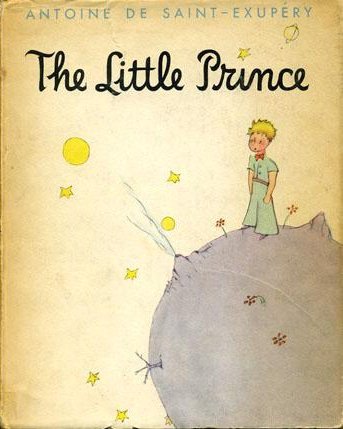
Perhaps the Little Prince was on to something, “And now here is my secret, a very simple secret: It is only with the heart that one can see rightly; what is essential is invisible to the eye.”
The Irish theologian, Peter Rollins, was part of a unique Church community in New York City called 'IconNYC'. If I understand it correctly, it was a year long experiment in Christian community that sought to consider the Christian journey, indeed the Christian community, in ways that held the tensions of doubts, uncertainties, and the realities of our struggles with belief.
Having some understanding of how the brain works, I realise how difficult it is for us, as human beings, to live with uncertainty. Our neuro-evolution has formed us to want patterns, to create certainty and predictability, for the sake of our survival. This can be seen in how we seek out communities of belonging that we understand (what in inter-group contact theory is called 'in-group' identity). We can understand how persons of a certain race, culture, economic class, religion, think and behave. So we seek sameness, and become afraid of difference. This leads to inter-group contact anxiety between the self and the other. It is not surprising to me that Americans want to build a wall, that European countries are trying to keep migrants out, and that racism and identity politics continue to thrive in South Africa. None of these things is just, right, or even desirable. Yet, we fall into the traps of self interest, and self protection. We are wired for it to a certain extent.
However, we soon find that even in the in-group there are differences. White protestant women in Chicago, IL see the world differently from white protestant men in Birmingham, AL. Not all South Africans see the world in the same way... You get the idea.
In my experience, the pursuit of certainty is painful, it is limiting, it binds us to our fears, instead of releasing us for freedom.
The 'IconNYC' community, and Peter Rollins' 'Pyrotheology' speak to me as I contemplate these issues. I am currently in Gothenburg in Sweden. Here I am the cultural, linguistic and geographical stranger (not to mention a stranger to the climate! I realised yesterday as it snowed, that my body was formed from the African soil, and baked in the African sun!) Yet, the difference, the strangeness, the doubts, can be OK. I can learn about others, and about myself. I can slow down and listen - paying a little more attention to unfamiliar people, places and experiences. And the difference becomes a gift. I don't have to collapse it into my world-view, or contain it in my understanding or experience. I can just participate, observe, experience, and know what I can.
It is a sacred experience. It reminds me that God is Swedish... And also African... And Asian... You get the idea? We are because of who God is. Our diversity is an expression of God's creativity.
Here is what Rollins had to say about uncertainties, doubts and pyrotheology:
The good news nestled in the heart of Christianity is not that which gives us certainty and satisfaction, but rather is that which helps us embrace our un-knowing, our doubts, and our dissatisfaction… Instead of seeking a burning bush, a place where God is, we will discover that every bush is burning, that everything is sacred and full of depth, if we only have eyes to see.
- Peter Rollins, Pyrotheology
If you have 3 minutes more, you may want to listen to him speaking about this in his wonderful Irish accent! See the video below, or at this link: https://youtu.be/gY-VITTf7k4
"You do not need to know precisely what is happening, or exactly where it is all going. What you need is to recognize the possibilities and challenges offered by the present moment, and to embrace them with courage, faith and hope." - Thomas Merton
I am dwelling in the work of Thomas Merton at the moment. Listen to this:
"Do not think that you can show your love for Christ by hating those who seem to be His enemies on earth. Suppose they really do hate Him: nevertheless He loves them, and you cannot be united with Him unless you love them too…. Do not be too quick to assume your enemy is a savage just because he is your enemy. Perhaps he is your enemy because he thinks you are a savage. Or perhaps he is afraid of you because he feels that you are afraid of him. And perhaps if he believed you were capable of loving him he would no longer be your enemy. Do not be too quick to assume that your enemy is an enemy of God just because he is your enemy. Perhaps he is your enemy precisely because he can find nothing in you that gives glory to God. Perhaps he fears you because he can find nothing in you of God’s love and God’s kindness and God’s patience and mercy and understanding of the weaknesses of men."- Thomas Merton, New Seeds of Contemplation
And this was my post on facebook on Heritage Day in South Africa (24 Septemeber 2018):
"Our real journey in life is interior: it is a matter of growth, deepening, and of an ever greater surrender to the creative action of love and grace in our hearts." - Thomas Merton
A blessed heritage day to all of my South African sisters and brothers. May we engage the very worst of our past with honesty, and the very best of our future with love.
I first started reading Merton when I was a graduate student in Theology at Rhodes University in the early 1990's. I was introduced to Merton's work by my friend and professor, Larry Kaufmann and by friends Kevin Snyman, George Marchinkowski.
This weekend I watched the excellent Paul Schrader film, 'First Reformed'. I highly recommend this film. My friend Robert Vosloo was the first persons to speak to me about this remarkable film. It is well worth watching. Merton's work runs through sections of the narrative.
So, I went back to my books and notes and have found a few very meaningful and powerful quotations that I have been sharing on facebook and twitter this weekend.
I am currently reading John W de Gruchy's latest book 'Without Apology: Faith, Hope and Love in a time of doubt, despair and violence' (Methodist Publishing House, Cape Town, 2016).
It is a beautiful collection of reflections that John wrote and delivered at the Volmoed Chapel, at Volmoed in Hermanus where he and Isobel are residents. The tone of these reflections is so beautiful. I am accustomed to hear John speak - which is always an inspiration. And of course I have read his academic books for years. His way of thinking has shaped my own. However, this book seems more personal, I not only catch glimpses of his magnificent mind, his wit and charm, but also of his deep spirituality. I can see his love for Christ and for all those people and things that Christ loves so much. It is a wonderfully inspiring book to read!
This evening I came across this quote which I thought I would like to share with you:
In a time when we know how to make war, but cannot make peace; when we can land people on the moon but struggle to find space for refugees; when we can build skyscrapers, but cannot build good houses for the poor; when we can transplant hearts and kidneys, but cannot eradicate hunger; when we have much information, but little wisdom, we need to acknowledge how, despite all our knowledge we are acting like fools, and putting the world at risk. We need to learn again to fear the Lord and affirm our humanity as we respect that of others.
In today's VLOG we talk about spirituality for daily living. I visit a beautiful wine farm in Franschhoek and interview a friend, Jacques Bornman @jacquesbornmanhttp://www.jacquesbornman.com
Last year was a tough year for many people around the world. I know it was difficult for many of my friends and family. Over the last couple of days I have had a number of conversations with friends who are feeling hopeless and concerned about issues ranging from politics, to economics and the environment.
In my reading I have come across a few quotes that challenge me to remember that as a person of faith I should live by a different standard. Christians live with a hope that is real, yet our hope cannot be collapsed into history, past, present or future, in its entirety. Yes, we must pay meticulous attention to what is happening around is. We must act with courage, grace and love in all situations. However, our hope is larger than history, it is based on a reality that is more real than our perception of what we believe to be real. Our hope comes from being claimed by the God of history. Our hope is eschatological - the fullness of life through the fullest Person (Jesus Christ) in the fullness of time.
Living with this kind of hope takes courage. It takes courage to live for someone, and something, more important than our immediate reaction to people and events. It takes grace to act, and react, in a manner that is different from other persons and the rest of the world. It takes commitment to live for the common good rather than just one's own comfort and security. It takes hard work and patience to stay on the path of rightness and justice for the long haul.
I pray that I will have the wisdom to live in this way, and that others will choose the live a life that is much better than mine.
Here are some quotes that inspired and challenged me on this journey:
“Christians cannot be pessimists. Christians must always nourish in their hearts the fullness of joy. Try it, brothers and sisters; I have tried it many times and in the darkest moments, when slander and persecution were at their worst: to unite myself intimately with Christ, my friend, and to feel a comfort that all the joys of the earth do not give – the joy of feeling yourself close to God, even when humans do not understand you. It is the deepest joy the heart can have.”
- Oscar Romero, The Violence of Love
"To be grateful for the good things that happen in our lives is easy, but to be grateful for all of our lives—the good as well as the bad, the moments of joy as well as the moments of sorrow, the successes as well as the failures, the rewards as well as the rejections—that requires hard spiritual work."
- Henri Nouwen, Bread for the journey (p.8)
And this quote about the importance of daily spiritual discipline in this life:
“The great spiritual task facing me is to so fully trust that I belong to God that I can be free in the world — free to speak even when my words are not received; free to act even when my actions are criticized, ridiculed, or considered useless… I am convinced that I will truly be able to love the world when I fully believe that I am loved far beyond its boundaries.”
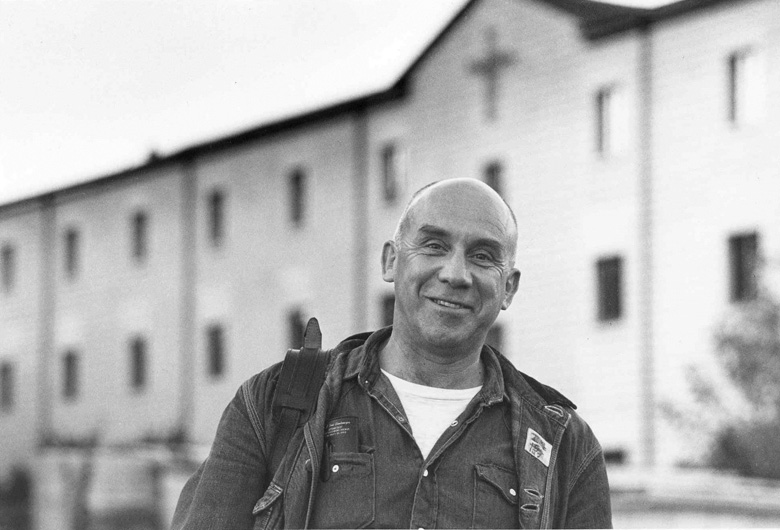
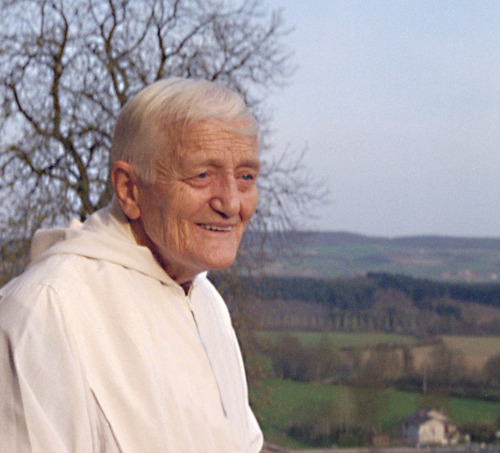
Today I give thanks for the life and ministry of Brother Roger today. The establishment of the Taizé community is a continuing gift of renewal and missional blessing to the Church across the world.
It reminds me that simple courage and constant obedience can often be used by God to bring about transformation, healing and renewal.
In 1940, despite the spread of war in Europe, Roger Schütz crossed the border from Switzerland into France to pursue a community life characterized by simplicity and the fellowship described in the gospels. From early on in his life, Brother Roger knew that such a life together could be a sign of reconciliation for Christians from different denominations.
After settling in a French village called Taizé, Brother Roger was caught for hiding Jewish refugees and had to leave France after two years. When he returned after World War II had ended, he was accompanied by a few men who became the first brothers of the Taize community, which grew into an ecumenical community with brothers on all continents, bearing witness to what brother Roger came to talk about as a “parable of community.”
On August 16 2005, during evening prayer in the Church of reconciliation at Taizé, Brother Roger was stabbed to death by a mentally ill woman.
In my devotional reading this morning I came across this remarkable quote from Dietrich Bonhoeffer about solitude and the Christian community. Of course Bonhoeffer's context was that of Finkenwalde (the roque seminary he set up for pastors who were not willing to serve the Nazi controlled Church).
Our Master of Theology students at Stellenbosch University have been studying what it means to have a spirituality that is missional - i.e., to have a spirituality that is alive in God's presence and discerns and acts upon the will of God in the world. This is a world engaging spirituality, rather than a world-negating spirituality.
This is part of my current journey.
Let him who cannot be alone beware of community. He will only do harm to himself and to the community. Alone you stood before God when He called you; alone you had to answer that call; alone you had to struggle and pray; and alone you will die and give an account to God. You cannot escape from yourself; for God has singled you out. If you refuse to be alone, you are rejecting Christ’s call to you, and you can have no part in the community of those who are called...
"The challenge of death comes to us all, and no one can die for another. Everyone must fight his own battle with death himself, alone... I will not be with you then, nor you with me" (Luther)
Let him who is not in community beware of being alone. Into the community you were called—the call was not meant for you alone; in the community of the called you bear your cross, you struggle, you pray. You are not alone even in death, and on the Last Day you will be only one member of the great congregation of Jesus Christ. If you scorn the fellowship of the brethren, you reject the call of Jesus Christ. If you scorn the fellowship of the brethren, you reject the call of Jesus Christ, and thus your solitude can only be hurtful to you.
"If I die, then I am not alone in death; if I suffer they [the fellowship] suffer with me" (Luther)
My great friend @EtiennePiek69 gave a great gift about a year and half ago 'Common prayer: A liturgy for ordinary radicals'. I have used it almost daily as my devotional guide. The liturgies and reflections for each day are a remarkable blessing to me.
In my quiet time this morning I came across this quote which spoke to me directly. Perhaps it may speak to you?
We have real difficulty here because everyone thinks of changing the world, but where, oh where, are those who think of changing themselves? People may genuinely want to be good, but seldom are they prepared to do what it takes to produce the inward life of goodness that can form the soul. Personal formation into the likeness of Christ is arduous and lifelong.
- Richard Foster (American Quaker and writer).
Have a truly blessed day today! May the Lord grant me courage and discipline to be changed, even as I desire to change the world!
This weekend I had the joy of spending some time with the men in my Christian forum group. This is a group that offers both care for the journey, as well as support and accountability along the way. You can find out more about The Network of Christian Forums here.
To structure our retreat together I introduced my friends to St Ignatius' First Principle and Foundation. It is a powerful reminder to keep one's spiritual life centered on what matters most, and out of that to bless God and the world. Perhaps it could encourage you?
The Goal of our life is to live with God forever.
God, who loves us, gave us life. Our own response of love allows God's life to flow into us without limit.
All the things in this world are gifts from God, presented to us so that we can know God more easily and make a return of love more readily.
As a result, we appreciate and use all these gifts of God insofar as they help us to develop as loving persons. But if any of these gifts become the center of our lives, they displace God and so hinder our growth toward our goal.
In everyday life, then, we must hold ourselves in balance before all of these created gifts insofar as we have a choice and are not bound by some obligation.
We should not fix our desires on health or sickness, wealth or poverty, success or failure, a long life or a short one.
For everything has the potential of calling forth in us a deeper response to our life in God.
Our only desire and our one choice should be this:
I want and I choose what better leads to God's deepening his life in me.
In my devotions this morning I was inspired by this quote on prayer:
It is impressive to see how prayer opens one's eyes to nature. Prayer makes men contemplative and attentive. In place of manipulating, the man who prays stands receptive before the world. He no longer grabs but caresses, he no longer bites, but kisses, he no longer examines but admires. To this man, as for Merton, nature can show itself completely renewed. Instead of an obstacle, it becomes a way; instead of an invulnerable shield, it becomes a veil which gives a preview of unknown horizons.
From 'Thomas Merton: Contemplative Critic' by Henri J. M. Nouwen
One of the great blessings of traveling is that it changes my regular patterns of work. While I have been busy on this trip to Malaysia - meetings, speaking engagements, luncheons and dinners - I have also not had the constant barrage of telephone calls, office appointments and the regular expectations of daily life. This has allowed me an opportunity for silence, prayer and reflection. I feel that I have sorely needed this inner space for some time now. I do live a busy life between my various roles.
In my devotional time I like to read the scriptures, pray, have a time of silent centering prayer, and also read something challenging, encouraging, or instructive, from a Christian author. Here's what I read yesterday. It was very helpful on the relationship between freedom and spiritual discipline:
When we begin to ask what the conditions of inner renewal are, we receive essentially the same answers from nearly all of those whom we have most reason to respect. One major answer is the emphasis upon discipline. In the conduct of one's own life it is soon obvious, as many have learned the hard way, that empty freedom is a snare and a delusion. In following what comes naturally or easily, life simply ends in confusion, and in consequent disaster. Without the discipline of time, we spoil the next day the night before, and without the disciple of prayer, we are likely o end by having practically no experience of the divine-human encounter. However compassionate we may be with others, we dare not be soft or indulgent with ourselves. Excellence comes at a price, and one of the major prices is that of inner control.
We have not advanced very far in our spiritual lives if we have not encountered the basic paradox of freedom, to the effect that we are most free when we are bound. But not just any way of being bound will suffice; what matters is the character of the binding. The one who would like to be an athlete, but who is unwilling to discipline his body by regular exercise and by abstinence, is not free to excel on the field or the track. His failure to train rigorously and to live abstemiously denies him the freedom to go over the bar at the desired height, or to run with the desired speed and endurance. With one concerted voice the giants of the devotional life apply the same principle to the whole of life with the dictum: Discipline is the price of freedom.
- From The New Man of Our Time by Elton Trueblood.
What spiritual disciplines do you practice? Has your experience been that as you become more disciplined your capacity for freedom grows alongside the disciplines?

 Friday, December 21, 2018 at 9:47AM
  Somehow, in our pursuit of enlightenment we become less and less enlightened and more and more totalitarian.